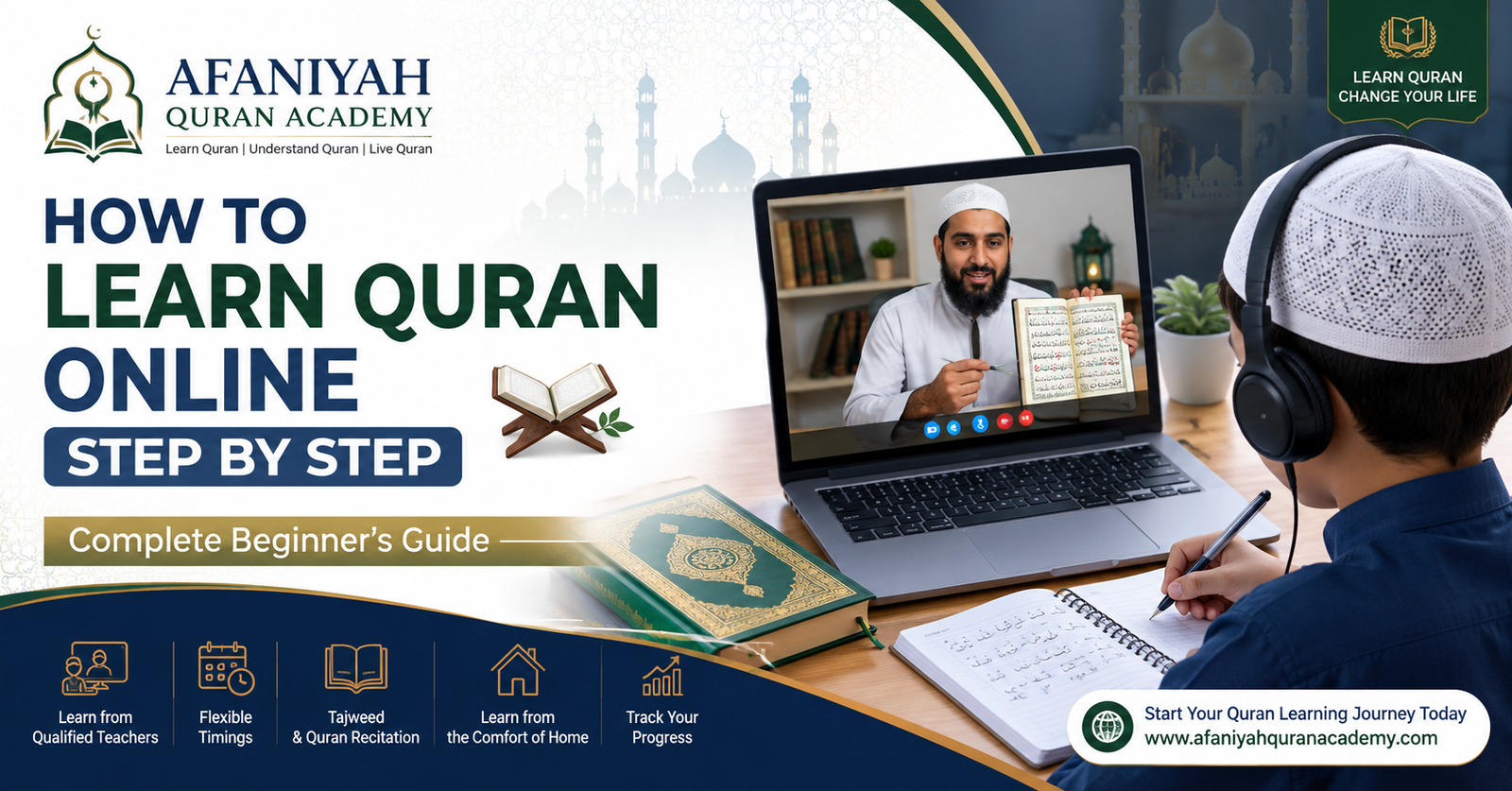
How to Learn Quran Online Step by Step: A Complete Beginner's Guide
Learning the Holy Quran is a lifelong journey that brings spiritual growth, inner peace, and a stronger connection with Allah (SWT). Thanks to modern technology, anyone can now learn the Quran online from the comfort of home, regardless of age or location.
Whether you are a beginner, a parent looking for Quran classes for your child, or an adult returning to Quran learning after many years, online Quran education offers flexibility, qualified teachers, and personalized lessons.
In this guide, you'll learn the exact steps to start your Quran learning journey successfully.
Why Choose Online Quran Learning?
Online Quran learning has become increasingly popular because it removes many traditional barriers. Students can learn from experienced teachers through live video sessions while maintaining flexible schedules.
Some of the biggest benefits include:
- Learn from home
- One-on-one personalized classes
- Flexible class timings
- Qualified male and female teachers
- Affordable monthly plans
- Progress tracking
- Suitable for children and adults
- Learn from anywhere in the world
Step 1: Set Your Intention (Niyyah)
Every act of worship begins with sincere intention.
Before starting your Quran journey, remind yourself why you want to learn.
Examples include:
- Seeking Allah's pleasure
- Understanding Islam better
- Teaching your children
- Improving your recitation
- Memorizing the Quran
- Reading with proper Tajweed
A sincere intention helps maintain consistency throughout your learning journey.
Step 2: Assess Your Current Level
Before joining online Quran classes, determine your current level.
Beginner
- Cannot read Arabic
- Needs Noorani Qaida
Intermediate
- Can read Arabic
- Needs Tajweed improvement
Advanced
- Wants Quran memorization (Hifz)
- Wants Tafsir or Islamic Studies
Knowing your level helps teachers prepare the right learning plan.
Step 3: Start with Noorani Qaida
For complete beginners, Noorani Qaida is the foundation of Quran reading.
You'll learn:
- Arabic alphabet
- Letter pronunciation
- Joining letters
- Short vowels
- Long vowels
- Sukoon
- Shaddah
- Basic Tajweed rules
Skipping Noorani Qaida often leads to pronunciation mistakes later.
Step 4: Learn Arabic Pronunciation (Makharij)
Correct pronunciation is essential when reciting the Quran.
Qualified teachers teach the proper articulation points (Makharij) for every Arabic letter.
For example:
- ح
- خ
- ع
- غ
- ق
These sounds can be difficult for non-Arabic speakers without guidance.
Practicing with a teacher helps develop accurate pronunciation from the beginning.
Step 5: Learn Basic Tajweed Rules
Tajweed means reciting the Quran correctly as it was revealed.
Important rules include:
Noon Sakinah
Understanding how "ن" is pronounced in different situations.
Meem Sakinah
Learning the correct pronunciation of "م".
Madd Rules
Knowing when to stretch vowel sounds.
Qalqalah
Applying echoing sounds correctly.
Ghunnah
Reciting nasal sounds properly.
Learning Tajweed gradually improves both confidence and recitation quality.
Step 6: Practice Daily
Consistency is more important than studying for long hours occasionally.
Even 20–30 minutes of daily practice can lead to remarkable improvement.
A simple daily schedule could be:
- 10 minutes: Revision
- 15 minutes: New lesson
- 10 minutes: Recitation practice
- 5 minutes: Review mistakes
Daily repetition strengthens memory and fluency.
Step 7: Read with an Experienced Quran Teacher
A qualified teacher can:
- Correct pronunciation mistakes
- Teach Tajweed properly
- Answer your questions
- Motivate you
- Track your progress
Learning without guidance may result in habits that are difficult to correct later.
Step 8: Memorize Short Surahs
After becoming comfortable with reading, begin memorizing shorter chapters.
Many students start with:
- Surah Al-Fatihah
- Surah Al-Ikhlas
- Surah Al-Falaq
- Surah An-Nas
- Surah Al-Kawthar
Memorizing gradually builds confidence and prepares students for longer Surahs.
Step 9: Understand the Meaning
Reading the Quran is highly rewarding, but understanding its message deepens the experience.
Spend time learning:
- Translation
- Basic Tafsir
- Context of revelation
- Daily lessons from each Surah
Understanding the Quran helps apply its teachings in everyday life.
Step 10: Stay Consistent
The most successful Quran students are not always the fastest—they are the most consistent.
Some helpful habits include:
- Attend every scheduled class
- Review previous lessons
- Practice daily
- Ask questions when unsure
- Make dua for knowledge
- Be patient with your progress
Small, consistent efforts often lead to lasting improvement.
Common Challenges in Learning Quran Online
Lack of Consistency
Create a fixed study schedule and treat your Quran class like any other important commitment.
Pronunciation Difficulties
Practice regularly with your teacher and repeat challenging letters until they become easier.
Busy Schedule
Choose flexible class timings that fit your daily routine, even if it's just a short session.
Fear of Making Mistakes
Remember that learning is a process. Mistakes are natural and become opportunities for improvement when corrected by a qualified teacher.
Tips for Parents
Parents play a key role in encouraging children to learn the Quran.
Helpful tips include:
- Create a quiet learning space
- Encourage regular attendance
- Celebrate milestones
- Revise lessons together
- Communicate with the teacher
- Set realistic goals
Positive encouragement helps children develop a lifelong love for Quran learning.
Why Choose Afaniyah Quran Academy?
At Afaniyah Quran Academy, students receive personalized online Quran education from experienced teachers in a supportive learning environment.
Our programs include:
- Online Quran Reading
- Noorani Qaida
- Quran with Tajweed
- Quran Memorization (Hifz)
- Islamic Studies
- Arabic Language Basics
- Classes for Kids and Adults
- Qualified Male and Female Tutors
- Flexible Scheduling
- One-on-One Live Sessions
Whether you're taking your first step or looking to improve your recitation, our goal is to help you learn with confidence and consistency.
Frequently Asked Questions (FAQs)
Can I learn the Quran online as a complete beginner?
Yes. Many online academies offer beginner-friendly courses that start with Noorani Qaida and gradually build reading and recitation skills.
How long does it take to learn Quran reading?
The timeline varies depending on age, prior knowledge, and practice. With consistent lessons and daily revision, many beginners develop solid reading skills within several months.
Are online Quran classes suitable for children?
Yes. Interactive one-on-one lessons with experienced teachers make online classes a convenient option for children.
Do I need to know Arabic before learning the Quran?
No. Most beginner programs teach Arabic letters, pronunciation, and reading from the basics.
How often should I attend Quran classes?
For steady progress, aim for at least 3–5 classes per week, along with short daily practice sessions.
Conclusion
Learning the Quran online is an accessible and effective way to build a lifelong connection with the Book of Allah. By starting with a sincere intention, mastering the basics through Noorani Qaida, learning proper Tajweed, practicing consistently, and studying with qualified teachers, students of all ages can make meaningful progress.
If you're ready to begin or continue your Quran learning journey, Afaniyah Quran Academy offers structured online classes designed to support beginners, children, and adults with experienced instructors and flexible schedules.
Comments